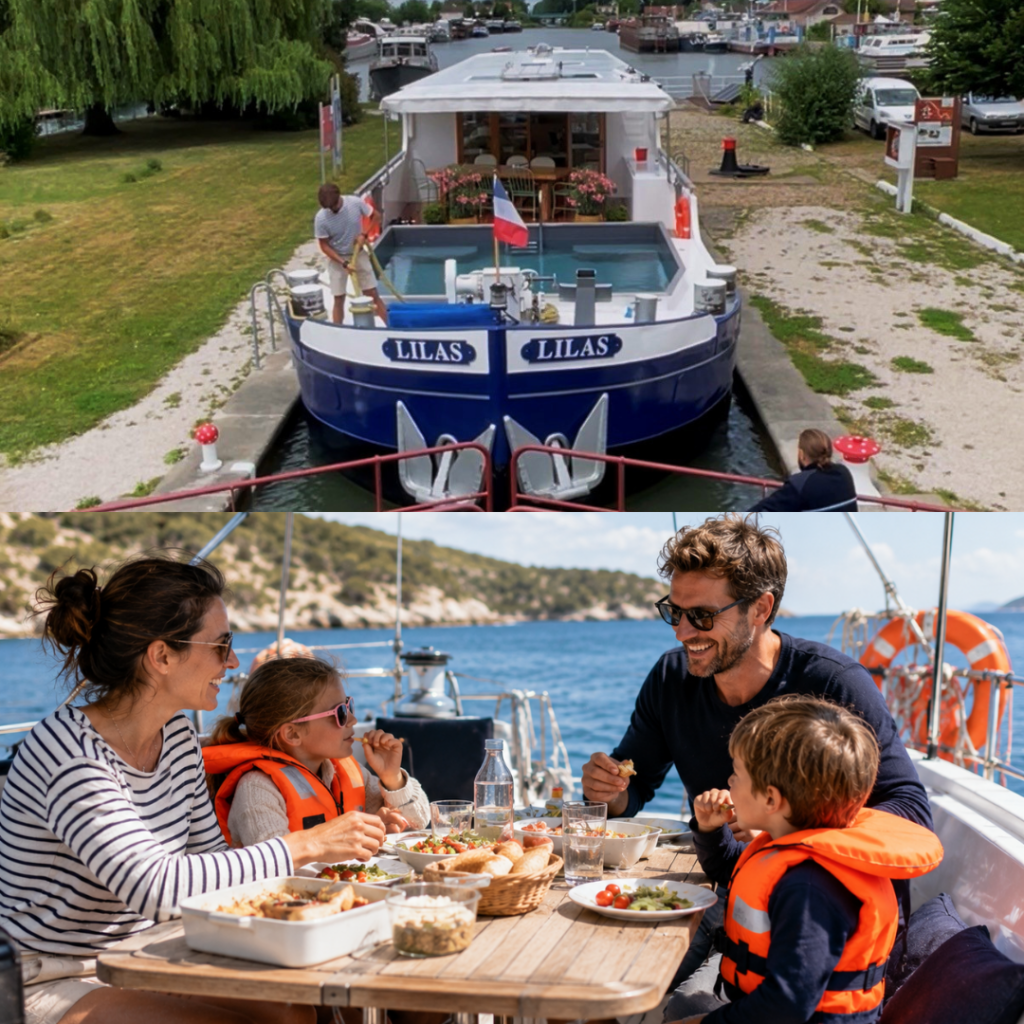
Boat Safety: Best Practices for Keeping Your Crew Safe
When it comes to safety on board, many people immediately think of life jackets or fire extinguishers. However, safety is not based solely on mandatory equipment.
Whether you are cruising on canals, rivers or at sea, a few simple precautions can help reduce risks and allow you to fully enjoy every trip on the water.
Safety begins long before leaving the dock
A well-maintained boat is a safer boat. Many incidents are caused by poor maintenance or an unnoticed issue. A leak, a faulty battery or an expired fire extinguisher can quickly turn an enjoyable cruise into a difficult situation.
Taking the time to inspect your boat regularly helps anticipate potential problems and avoid many inconveniences.
Essential Safety Equipment on Board
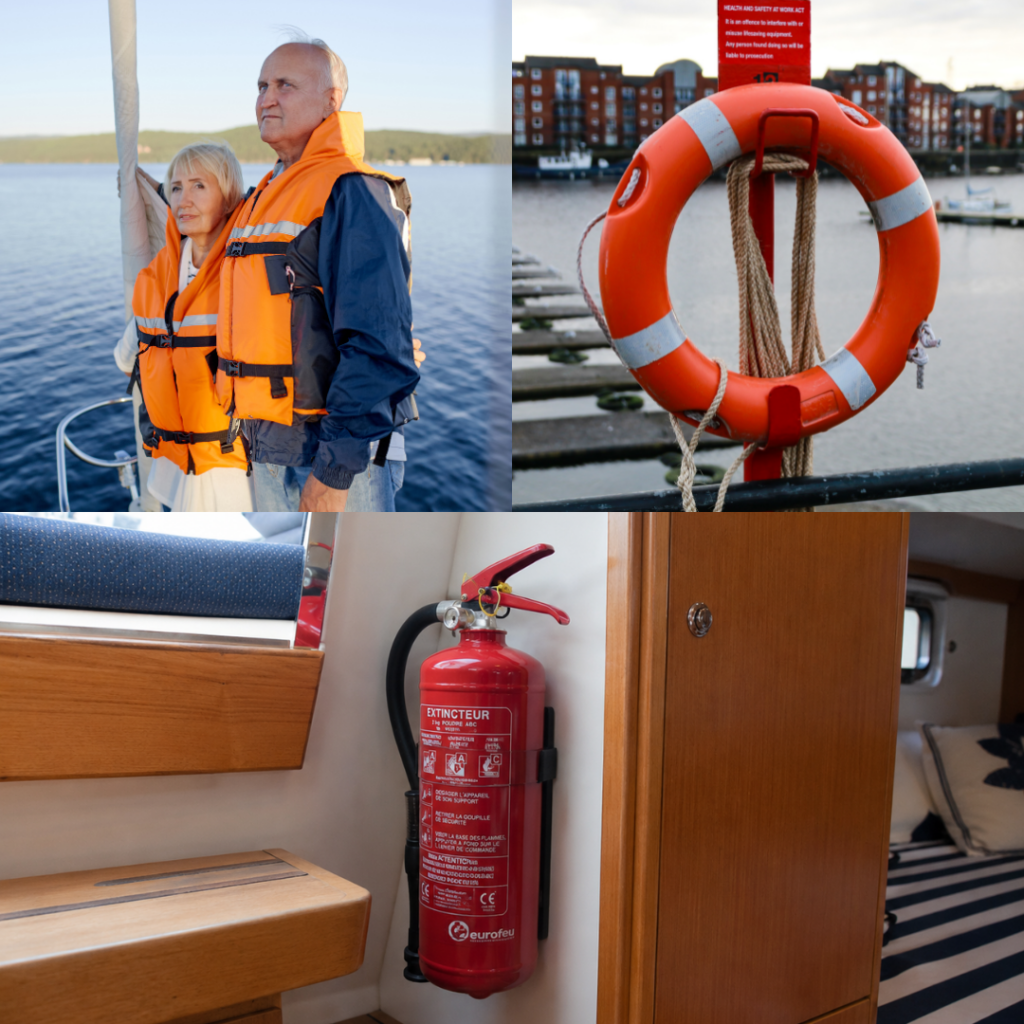
Life Jackets
Every person on board should have a life jacket that is suitable for their size and build.
Before departure, check:
- The number of life jackets available
- Their overall condition
- Their accessibility in case of an emergency
Life Buoy
A life buoy is an essential piece of safety equipment in the event of a fall. It should be easily accessible at all times.
Fire Extinguishers
A fire on board can have serious consequences.
It is important to regularly check that fire extinguishers are present, within their validity period, and correctly located on the boat.
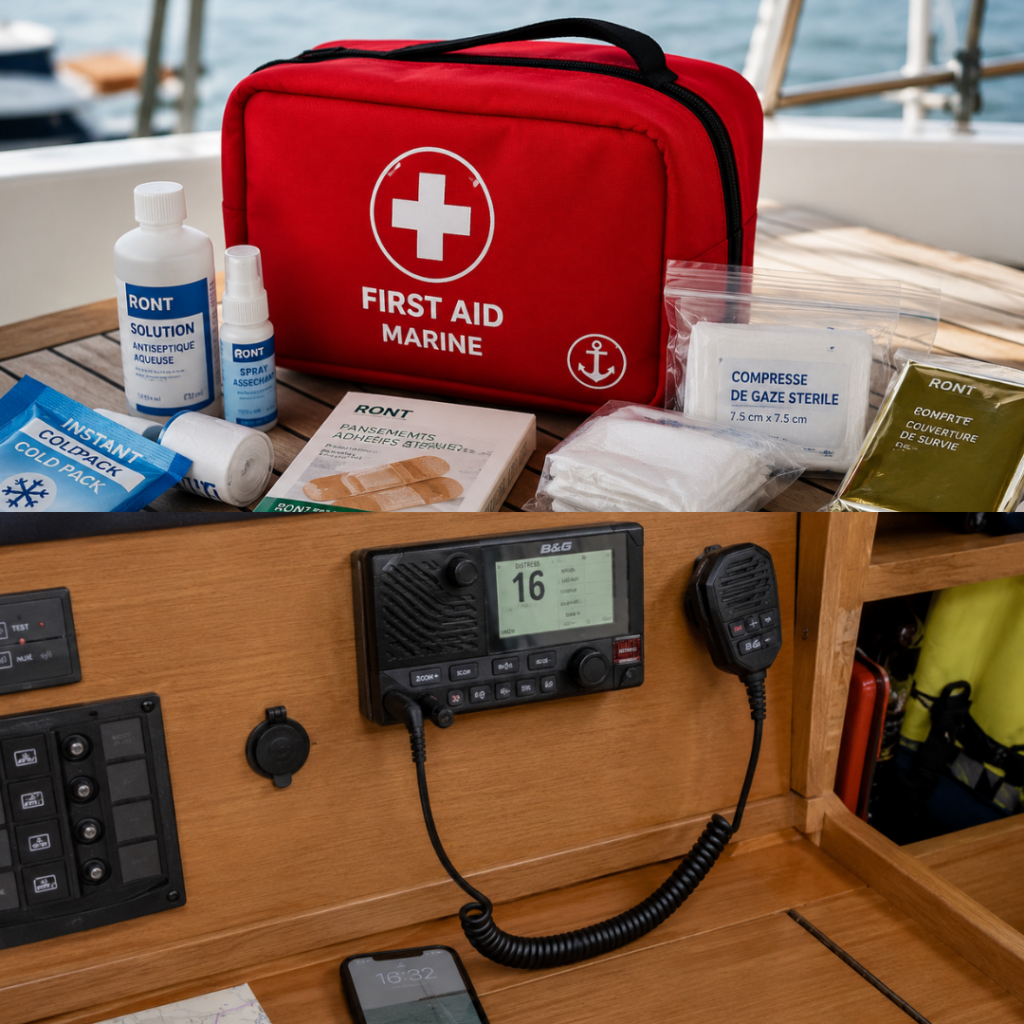
First Aid Kit
A well-stocked first aid kit allows you to deal with everyday incidents such as:
- Cuts
- Minor burns
- Scratches
- Common ailments
Remember to check its contents regularly.
Communication Equipment
Depending on your cruising plans, it is recommended to have:
- A fully charged mobile phone
- A VHF radio when necessary
- Useful emergency contact numbers
Safety equipment is the first line of defence in the event of an unexpected situation on board.
Properly maintained, correctly stored and immediately accessible, it enables you to respond effectively in an emergency.
Regularly checking the condition of your safety equipment is therefore one of the best habits to adopt for safe and confident boating.
The Main Causes of Accidents on Board
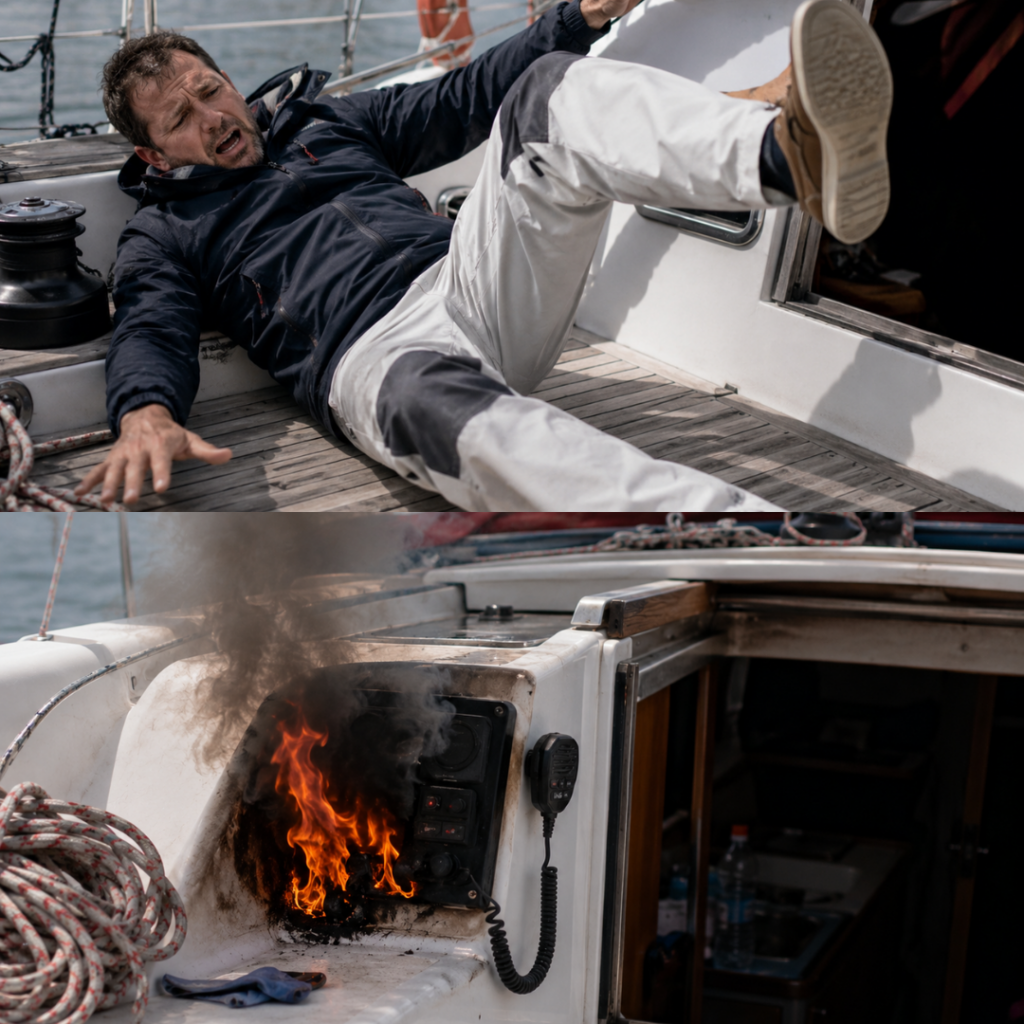
Falls on Board
Wet decks, lock passages, mooring manoeuvres or simply losing your balance: falls account for a large proportion of incidents on board.
To reduce the risks:
- Wear non-slip footwear
- Use handrails whenever possible
- Avoid running on deck
- Keep side decks and walkways clear
Fires
Galley equipment, electrical systems, chargers and other onboard devices can all be potential sources of fire.
A few simple precautions can significantly reduce the risks:
- Regularly inspect electrical installations
- Check gas systems and connections
- Maintain the engine properly
- Never leave cooking appliances unattended
Harbour and Lock Manoeuvres
Injuries frequently occur during docking operations and lock passages. Hands and fingers are particularly exposed when handling mooring lines.
One simple rule should always be followed: never attempt to stop or hold a moving boat with your hands.
Children’s Safety on Board
The presence of children requires special attention. Wearing a life jacket should be mandatory whenever they are on deck. It is also recommended to explain which areas they may access freely and which require adult supervision. The clearer the rules, the more safely and confidently children can enjoy being on board.
Adopting Safe Habits
Even on inland waterways, certain habits can significantly improve safety:
- Adjust your speed to the conditions
- Maintain safe distances from other boats
- Stay attentive to weather conditions
- Avoid any distractions at the helm
Planning your next trip on the water? Discover our complete pre-departure checklist and make sure everything is ready before you set off!